All Around Space Agency All Around Space Agency
MSN / 01 · Health Mission Division

Health Missions

Expedition overview

Time is the greatest obstacle in medical research. At All Around Space, we act as your dedicated Agent and Assistant, streamlining the connection between Earth-based laboratories and the unique research environment of microgravity. Our goal is to handle the logistical coordination and advocate for your mission, ensuring it is expedited so you can focus on the science that benefits all humankind.

Operational status · In development

All Around Space Agency is an early-stage venture. The service model described on this page is our intended structure, not a description of services currently in operation. We hold no partnership, agency, or representation agreement with any launch provider, station operator, or company named on this site. Named organisations are referenced for market context only.

The service

Your strategic partner for space

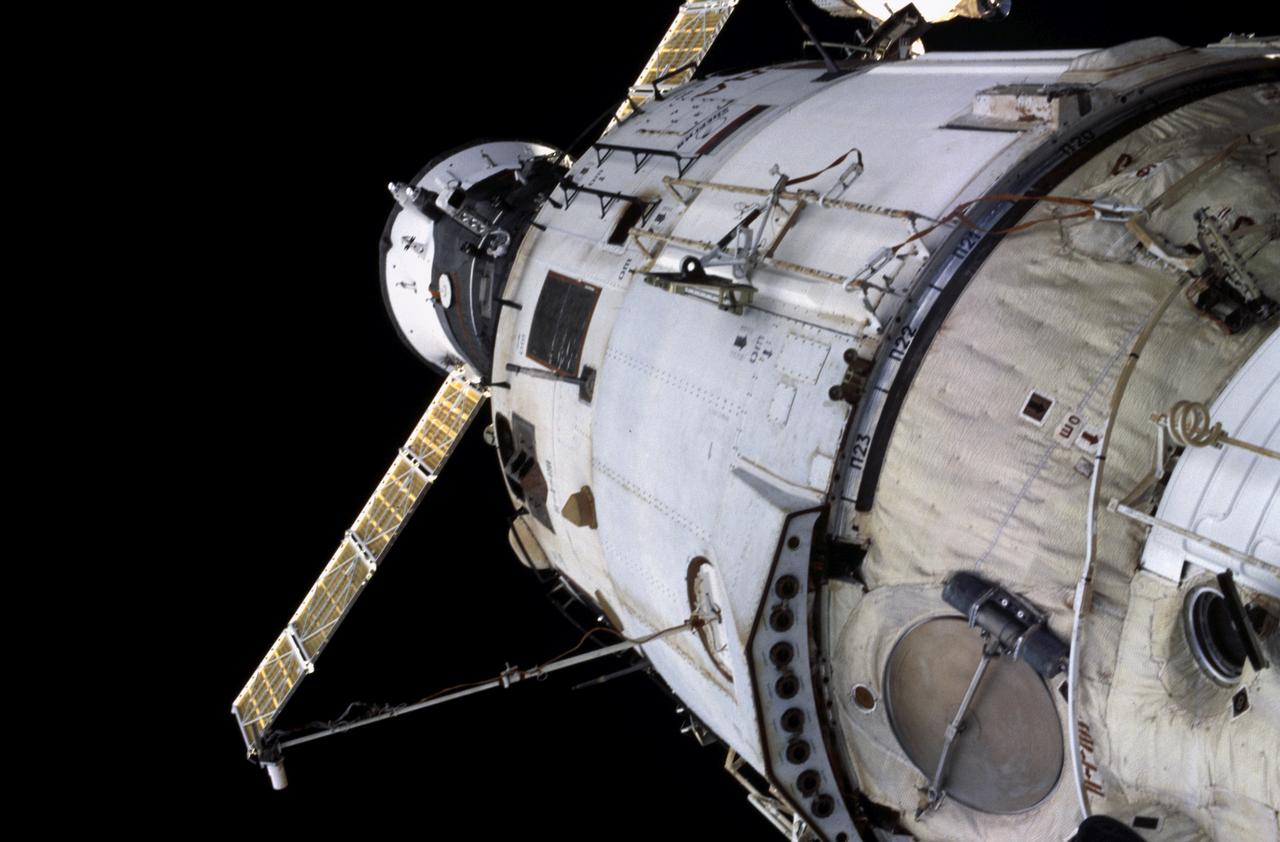
Exterior view of the International Space Station in orbit
Orbital platforms are the laboratory. We are the route to them.  ·  Image: NASA

We don’t build the hardware; we provide the Bridge.

As a platform-agnostic agency, we serve as a Market Maker — matching your scientific goals with the most cost-effective and efficient flight-certified providers in the industry.

Our agency process

Four steps to orbit

Step 01

Strategic Intake

We identify your research objectives and the specific physical bottlenecks you are facing in your current Earth-based lab.

Step 02

Market Matching

We would survey available capacity across flight providers to identify a suitable orbital platform, timeline, and price for your payload.

Step 03

Expediting & Advocacy

We support you through the entire process as your assistant, helping you navigate the pathway to orbit so you can focus on the experiment, not the logistics.

Step 04

Data Analysis Pipeline

Once your orbital data is gathered, we assist in the transition of that information to FindTheCure.AI, where deep-learning analysis is intended to help break down the findings to identify potential medical breakthroughs.

Agency tiers & rates

Three ways to engage

Tier 1 · Fixed fee

Strategic Feasibility Study

Intended structure: a comprehensive roadmap for your research, evaluating hardware compatibility and flight availability to provide a “Go / No-Go” plan.

Tier 2 · Commission

Full Mission Brokerage & Integration

Intended structure: acting as your dedicated agent from booking to splashdown, handling rideshare logistics to expedite your launch.

Tier 3 · Subscription

Institutional Retainer & Advisory

Intended structure: ongoing “Space Desk” monitoring of new launch opportunities and emerging technologies to keep your lab at the forefront.

Proven research pathways

Case studies

Four applications where orbit does something Earth physically cannot.

01 · Regenerative medicine

Liver tissue & cirrhosis

The science: In microgravity, liver cells self-assemble into functional 3D liver organoids. These “mini-livers” develop blood-vessel mimics and metabolize drugs more accurately than flat Earth-based samples.

Support: UCSF Research — How Liver Tissue from the ISS May Transform Tissue Engineering
Status: Research presented at the American College of Surgeons (2024).

02 · Oncology

Tumor modeling — 3D spheroids

The science: Cancer cells in orbit naturally form 3D multicellular spheres. These models mirror the structure of real tumors, allowing for higher-accuracy drug testing than 2D Earth samples.

Support: Stem Cells Translational Medicine (2025) — effects of microgravity on cancer cells.

03 · Musculoskeletal

Accelerated aging studies

The science: Space acts as a “fast-forward” environment for bone loss — roughly 10× faster than Earth. This allows rapid testing of treatments for osteoporosis and muscle wasting.

Support: NASA Spinoff — Rodent Research Contributes to Osteoporosis Treatments (Amgen / Denosumab).

04 · Drug delivery

High-fidelity protein crystals

The science: Without gravity, protein crystals grow more uniform, providing superior data for drug formulation.

Support: ISS National Lab — Merck Lab publishes Keytruda results.
Result: Led to a one-minute injectable version of the cancer drug.

The purpose

Powering FindTheCure.AI

AllAroundSpace.agency is the commercial engine that fuels our primary mission. By assisting researchers in reaching orbit faster and gathering higher-fidelity data, the intent is to generate the resources and information necessary to drive our deep-learning initiative at FindTheCure.AI.

The closing window · ISS retirement 2030

The International Space Station is scheduled for retirement in 2030, and NASA is transitioning from station operator to customer — buying research services from commercial platforms rather than running its own. Orbital research capacity is being rebuilt from scratch, and early allocations are being claimed now. Verified: Sep 2026

Why now

Research slots are
finite and filling

Commercial stations are coming online with meaningfully smaller research capacity than the ISS provided. Vast’s Haven-1, targeted to launch in 2027, supports roughly 160 astronaut-days of research, manufacturing, and technology testing across its service life, and its payload partners already include Redwire, Yuri Gravity, JAMSS, Interstellar Lab, and Exobiosphere. Axiom Station’s first module (AxPPTM) is targeted for late 2027, with a free-flying two-module station expected in 2028. Verified: Sep 2026 Verified: Sep 2026

A shrinking number of slots, a hard 2030 deadline, and a fragmented provider landscape. That is exactly when an agent matters.

Commercial validation

Pharma is no longer
watching from Earth

Varda Space Industries

United Therapeutics partnership

Varda announced a collaboration with United Therapeutics to study microgravity in developing improved formulations for rare pulmonary disease — reported as among the first instances of a publicly traded pharmaceutical company committing its own capital to commercial space-based drug manufacturing rather than relying on government-funded research.

Reported: MIT Technology Review, May 2026.
Prior flight heritage: Varda grew ritonavir crystals on its first orbital capsule mission, with further capsules flown since.

What it signals

The thesis is now commercial

Microgravity crystallisation has moved from academic curiosity to a line item in pharmaceutical R&D budgets. The question facing research institutions is no longer whether orbit produces better data — it is who can get them there, and how quickly.

Our role: we do not manufacture in orbit. We broker the access, compress the timeline, and route the returned data into deep-learning analysis.

Researchers & institutions

Get your experiment
into orbit

Tell us your research objective and the bottleneck you’re hitting on Earth. We’ll tell you whether microgravity solves it — and what it takes to fly.

Start a feasibility study →